Snapping Turtle the Size of a Kiddie Pool Halts Traffic on the LIE — Bureau Declares It 'Probably Nothing' (It Is Something)
Officially, this office does not classify a large turtle as a cryptid. Officially. A review of the shell geometry, the witness statements, and one trooper's laser measurement suggests the official position deserves an asterisk.
Deshawn Pruitt · Evidence & Archives · July 2, 2026 · 4 min read
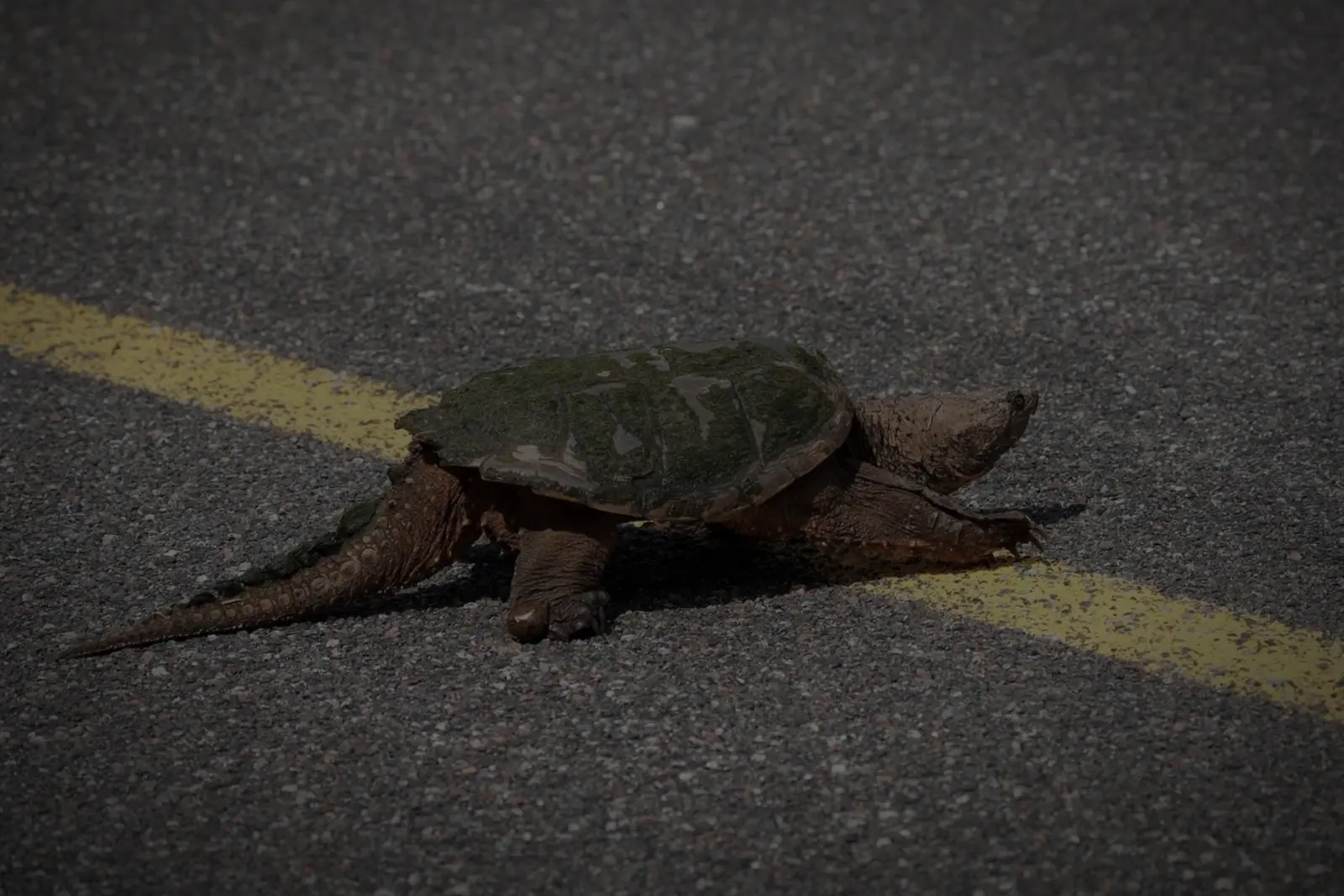
At 07:40 on June 30, eastbound traffic on the Long Island Expressway stopped for twenty-five minutes between exits 68 and 69 while a snapping turtle crossed all three lanes and the HOV lane at its own pace. This much is uncontested; it made two radio traffic reports, where it was described, memorably, as 'a pedestrian.'
The Bureau's official classification of this event, filed the same afternoon, is 'Probably Nothing — large specimen of Chelydra serpentina, no anomalous features.' I wrote that classification. I want to walk you through why I no longer fully stand behind my own handwriting.
The measurement problem
A state trooper on scene, equipped with a laser rangefinder for accident reconstruction, measured the carapace at 118 centimeters. For reference, the largest verified common snapping turtle carapace on record is a little under 50 centimeters. The largest alligator snapper — a species that does not occur within a thousand miles of the LIE — approaches 80. There is no living turtle taxon that produces a 118-centimeter freshwater carapace. There was one. It is called Stupendemys. It has been extinct for five million years, and it lived in Venezuela, which is not exit 68.
The direction problem
A turtle crossing the LIE at exit 68 heading north is leaving the Carmans River watershed — excellent turtle habitat — and walking toward, ultimately, the Long Island Sound, by way of several parking lots. No herpetological model explains this route. It was not seeking water. It was seeking different water, with the unhurried confidence of something that has made this exact walk before, possibly when the road was not there. Possibly when nothing was there.
“It looked at my cruiser the way I look at a cone.”
The file stays classified 'Probably Nothing,' because the Bureau's credibility rests on restraint, and because my supervisor — who is also me — insists on it. But archives has quietly cross-referenced this event with four 'large shell' reports from the Carmans River corridor dating to 1978, and has moved the folder from the gray cabinet to the green one. Regular readers know what the green cabinet means. It is something.
More dispatches
 Jul 14, 2026
FIELD OPERATION
OPERATION: FIRST CONTACT — The Bigfoot Expedition, August 16
The Bureau has triangulated six weeks of escalating sighting activity to a single corridor. On August 16 we mount the largest coordinated civilian field operation in our history. You can be on it.
Dale "Birchwatcher" Kowalski · 6 min read
 Jul 11, 2026
URGENT DISPATCH
URGENT DISPATCH: Division 9 Intends to Take Him
FOIA fragments, a whistleblower called AGENT MAPLE, box trucks with federal tires and no plates. The evidence says a task force plans to extract Bigfoot from the Pine Barrens before we ever meet him. This is the memo they should have redacted better.
Dale "Birchwatcher" Kowalski · 7 min read
 Jul 8, 2026
AERIAL PHENOMENA
Mothman Linked to String of Catalytic Converter Thefts in Ronkonkoma
Eleven converters in nine days, no camera footage, and a witness who heard 'large wings, but organized.' The Aerial Phenomena Desk examines the only theory that fits all the facts.
Marcy Villanueva · 4 min read